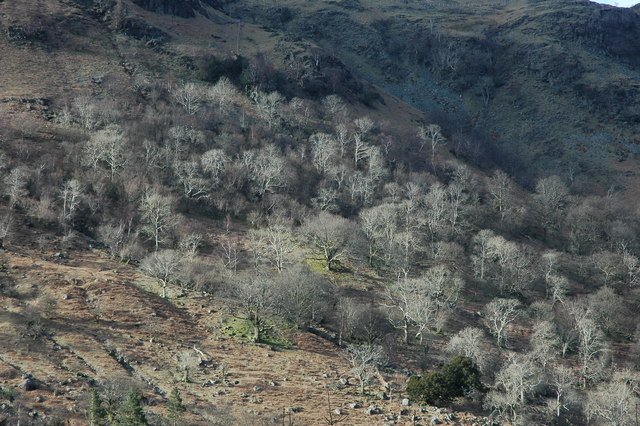
The Borrowdale Yew at Seathwaite Farm is one of the four ancient yews (Taxus baccata) celebrated in Wordsworth‟s 1803 poem, ‘Yew Trees’.
One of the four went down at Rosthwaite Farm in a great storm in 1883 but it still impressed Wordsworth, who proclaimed its diameter was large enough to be a cave entrance. The three others still survive. The Borrowdale Yew is female and boasts a large hollow that fits four people. Although it was damaged in a storm in 2005, the tree still thrives and has the potential to live for many more years.
It is is also a haven for much distinctive fauna: buzzards, ravens, peregrines kestrels, barn owl and a plethora of smaller birds; deer (including the black fallow – see picture below), red squirrels, badgers, stoats, weasels, otter, lizards and butterflies;
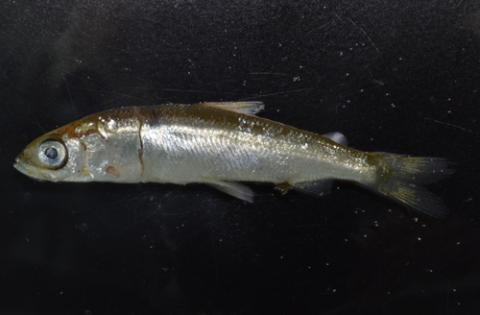
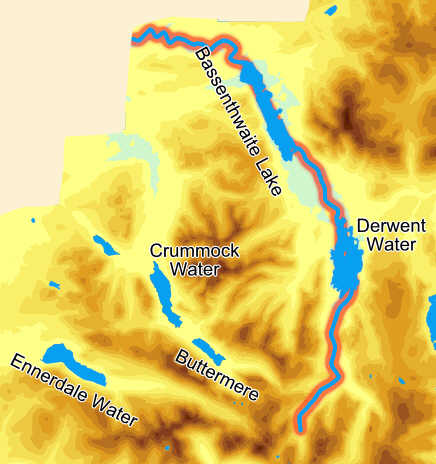
Derwentwater, together with Bassenthwaite Lake, are the only two lakes in the UK that are still known to harbour the endangered vendace – a relic fish from the last Ice Age. Rainbow and Brown Trout can be found at the beautiful Watendlath Tarn. The River Derwent and its tributaries is one of the finest large river systems in the UK.
The quality and importance of the wildlife and habitats along the river is widely recognised and they are protected under European law as a Special Area of Conservation (SAC). The river is also a Site of Special Scientific Interest (SSSI). Salmon and sea trout are in decline on the Greta and Derwent as in many other parts of the U.K.
The rivers and their tributaries are key spawning and nursery areas for these fish and essential to their survival. The descent can be paddled from Borrowdale into Derwentwater, Bassenthwaite Lake and to the tidal limit at Workington by permit and booking system.
The Upper Derwent is fed by several other rivers in the valleys at the head of Borrowdale. It then leaves Derwentwater, is joined by the Greta at Keswick (Middle Derwent), on its way to Bassenthwaite Lake which outflows (Lower Derwent) through Cockermouth to the Irish Sea at Workington.